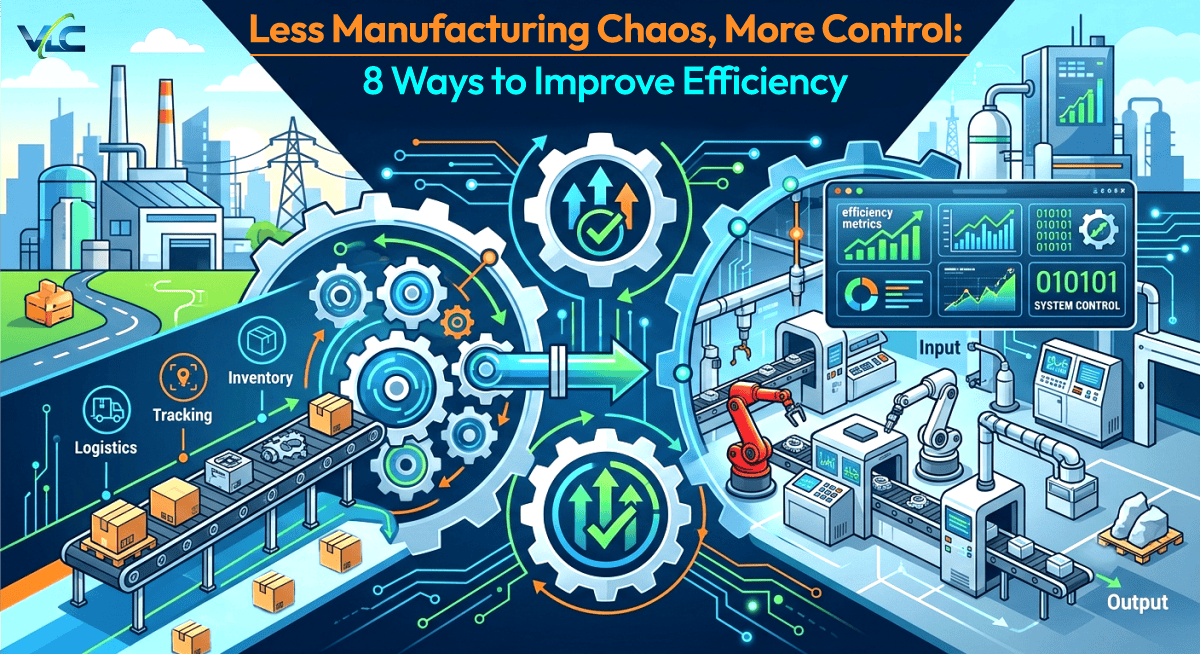
Less Manufacturing Chaos, More Control: 8 Ways to Improve Efficiency
It’s 9:00 on a Monday morning. A production order is running behind because a critical component hasn’t arrived. The warehouse team is checking stock records to figure out whether the material is actually available. Meanwhile, a machine on the shop floor needs maintenance, two urgent customer orders have come in, and the production manager is trying to rearrange the day’s schedule.
Everyone is working. Everyone is busy. But somehow, things aren’t moving.
This is the reality for many manufacturing businesses. The problem isn’t necessarily a lack of people, equipment, or effort. It’s the everyday disconnect between production, inventory, purchasing, maintenance, and the systems that keep everything running.
One delay creates another. A missing update leads to a wrong decision. A small issue becomes a bigger disruption. Manufacturing efficiency isn’t about pushing teams to work harder. It’s about making their work easier, better connected, and more predictable. Here are eight ways manufacturers can start bringing order to the chaos.
1. Give Production Plans Room to Breathe
Let’s return to that Monday morning. The production manager has a schedule, but it no longer reflects what’s happening on the floor. A machine is unavailable, a material delivery is delayed, and an urgent order needs attention.
Now comes the familiar exercise: calling different teams, checking availability, updating spreadsheets, and trying to work out which job should move next.
Production planning becomes much easier when schedules reflect actual capacity, resource availability, and changing priorities. Visual Scheduling can help planners see production activities more clearly, identify conflicts, and make adjustments without losing sight of the bigger picture.
With VLC Visual Scheduling and Production Optimization, manufacturers can work toward better coordination of production activities and resources.
The aim isn’t to create a schedule that never changes. It’s to make changes easier to manage.
2. Know What’s in the Warehouse Before You Need It
A production line is ready to move, but the required component is nowhere to be found. The system shows stock available, yet the warehouse team cannot locate it. Someone has to investigate, check records, and trace previous movements.
That is time production simply cannot afford to lose.
Inventory accuracy is essential to keeping manufacturing operations moving. Teams need to know what is available, where it is stored, and what has already been allocated to production orders.
Solutions such as VLC Smart Warehouse Management help businesses improve inventory visibility and manage warehouse activities more effectively.
When stock information is reliable, teams can spend less time searching for materials and more time keeping production on track.
3. Bring the Shop Floor Into the Conversation
The production team completes a job, but the update doesn’t reach the planning team immediately. Inventory records remain unchanged, and management is still looking at yesterday’s production figures.
It may seem like a small communication gap, but these delays can affect decisions across the business.
Shop floor activities need to connect with the wider production process. VLC Shop Floor Execution helps bring more structure to production activities, making it easier to manage and track work as it moves through the manufacturing process.
When information from the shop floor becomes part of the larger operational picture, teams can coordinate better and respond with greater confidence.
4. Stop Waiting for Equipment to Break Down
A machine starts behaving differently. An operator notices unusual performance, but production is busy, so the issue gets pushed aside. A few days later, the machine stops working altogether.
Now there’s a maintenance emergency, an interrupted schedule, and another delivery deadline at risk.
Maintenance should not become a priority only when equipment fails. Regular maintenance planning, organized records, and timely follow-ups can help manufacturers manage equipment more proactively.
VLC Maintenance Management supports businesses in organizing maintenance activities and improving control over equipment-related processes.
The earlier teams address maintenance needs, the better their chances of avoiding unnecessary interruptions.
5. Catch Quality Issues Before They Travel Further
Imagine a batch moving through several stages of production before someone discovers a recurring defect. By then, the business may have already spent time, materials, and labor producing items that need rework.
Quality cannot be treated as a final inspection task. It needs to be part of the process from the beginning.
Manufacturers need consistent inspection procedures, clear quality records, and a way to identify recurring issues. VLC Quality Management helps bring structure to quality-related activities, supporting better monitoring and process control.
Catching problems earlier can reduce rework, minimize waste, and help teams maintain more consistent standards.
6. Make Sure Materials and Production Work Together
The purchasing team is ordering materials based on one set of requirements. Production is working from another. Meanwhile, a change in a bill of materials hasn’t been reflected everywhere it needs to be.
This is how material shortages and unnecessary purchases find their way into manufacturing.
Production requirements need to be clearly connected to bills of materials, inventory, and purchasing activities.
When teams understand exactly what each job requires, they can plan material availability more effectively and avoid discovering problems halfway through production.
7. Get Your Business Systems Talking to Each Other
By now, the production manager has received updates from the warehouse, maintenance, and quality teams. But the information sits in different systems, spreadsheets, and reports.
Getting a complete picture means bringing everything together manually.
Disconnected systems create more than administrative work. They make it harder for people to act on information when they need it.
An integrated environment built around Microsoft Dynamics 365 Business Central and the right connected applications can help manufacturers bring important business processes closer together.
VLC helps businesses connect their ERP, warehouse, production, and other business systems so that information can move more effectively across departments.
Because better coordination starts with better-connected information.
8. Turn Everyday Data Into Better Decisions
At the end of the week, management wants to know why production targets were missed. Was it equipment downtime? Material shortages? Quality issues? Or scheduling conflicts?
The answers may already exist in the business’s data. The challenge is bringing them together and understanding what they reveal.
Production output, inventory movements, maintenance records, and quality reports can help manufacturers identify recurring bottlenecks and areas for improvement.
Through its Data & AI Transformation capabilities, VLC helps businesses make better use of their data and build a stronger foundation for informed decision-making.
Instead of simply looking back at what went wrong, manufacturers can start recognizing patterns and addressing issues before they repeat.
From Constant Firefighting to Better-Connected Operations
Think back to that Monday morning. The delayed order, missing component, maintenance issue, and changing production schedule were not necessarily separate problems. They were connected challenges that exposed gaps across the business.
Fixing one issue may provide temporary relief. But lasting improvement comes when production, inventory, maintenance, quality, and business systems work together.
That’s where the right technology makes a difference.
VLC helps manufacturing businesses address these everyday operational challenges through solutions such as Production Optimization, Visual Scheduling, Advanced Inventory, Shop Floor Execution, Smart Warehouse Management, Quality Management, and Maintenance Management.
The goal is not to add more technology for the sake of it. It’s to help manufacturers get more value from their people, processes, and existing business systems.
Less time chasing updates. Fewer surprises on the shop floor. More control over every stage of production. Because manufacturing efficiency isn’t about eliminating every unexpected event. It’s about building an operation that is better prepared to handle them. Talk to us today for a quick quote and how we can help you.